

Art and Creativity Support Learning
The Healing Power of Creative Expression: How Art Helps Traumatized Children Regulate and Learn
For many children who have experienced trauma, words are often not enough.
Trauma can live in the body long before it is understood in language. Children who have experienced adversity may struggle to explain what they feel, why they react strongly, or why concentrating, trusting others, or remaining calm can feel so difficult. Traditional classroom expectations—sit still, focus, speak clearly, regulate emotions—can become overwhelming when a child’s nervous system is operating from a place of fear, stress, or survival.
Creative expression offers another pathway.
Art, music, movement, storytelling, dramatic play, and other creative experiences provide children with safe and meaningful ways to process emotions, express identity, build connection, and regain a sense of control. Creative experiences help move children from survival states toward regulation, engagement, and learning.
Trauma and the Brain
Trauma affects how the brain processes stress, relationships, and safety. When children experience chronic stress or traumatic events, the brain’s alarm systems can remain highly activated. Students may appear withdrawn, reactive, inattentive, perfectionistic, or emotionally overwhelmed—not because they do not want to learn, but because their nervous systems are working to protect them.
Learning requires regulation. Children must feel sufficiently safe and emotionally grounded to focus attention, solve problems, reflect, and engage socially. This is where creative expression becomes powerful.
The arts engage sensory, emotional, cognitive, and relational systems simultaneously. They provide experiences that help calm the nervous system while also supporting meaning-making and connection.
Art Creates Safety Without Pressure
One of the greatest gifts of art is that it allows expression without demanding verbal explanation. A child may not be ready to talk about grief, fear, anger, or confusion, but they may communicate those feelings through color, movement, rhythm, imagery, or storytelling.
Creative experiences reduce the pressure of “getting it right.” In trauma-sensitive environments, art becomes less about performance and more about exploration, process, and voice. A blank page, a handful of clay, music, or movement can become an invitation rather than a demand.
When children create, they often experience:
Reduced anxiety and stress
Increased emotional release and expression
Greater self-awareness
Improved focus and attention
A growing sense of agency and competence
Opportunities for joy and imagination
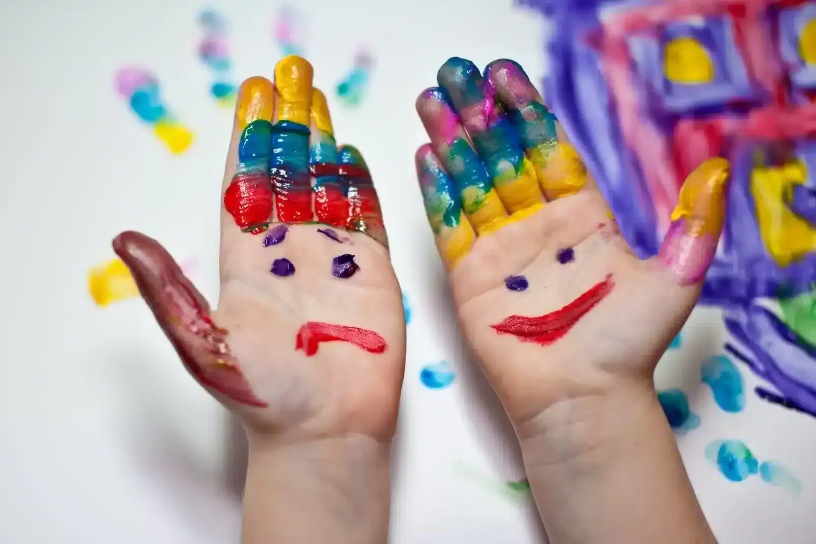
Importantly, creative expression allows children to externalize internal experiences. Feelings that may seem confusing or overwhelming inside the body become visible, manageable, and shareable.
Regulation Through Sensory and Embodied Experiences
Trauma is not only cognitive; it is physiological. Many traumatized children live in states of hyperarousal (fight-or-flight) or hypoarousal (shutdown, numbness, withdrawal). Creative activities can help regulate these nervous system responses through sensory and embodied engagement.
Rhythmic activities such as drumming, dancing, painting repetitive patterns, singing, or movement exercises can support emotional regulation by helping organize sensory experiences and restore calm. Tactile activities like sculpting clay, drawing, weaving, or collage-making can ground students in the present moment and reduce overwhelm.
Movement-based creative experiences are especially important because the body often carries stress responses that words cannot access. Stretching, drama, yoga, role-play, or expressive movement help children reconnect with bodily awareness, release tension, and build emotional flexibility.
These experiences are not separate from learning—they create the conditions that make learning possible.
Creativity Builds Connection and Belonging
Trauma can leave children feeling isolated, misunderstood, or disconnected from others. Shared creative experiences help rebuild relationships and community.
Collaborative murals, storytelling circles, theater projects, music-making, and shared inquiry invite students into connection without forcing vulnerability. Creative spaces allow children to be witnessed, valued, and affirmed by peers and adults.
Art also honors identity and culture. When students see their histories, languages, traditions, and lived experiences reflected in creative work, they begin to experience school as a place where they belong. Culturally responsive creative experiences communicate an important message: Your story matters here.
This sense of belonging is foundational to engagement and learning.
Creative Expression Supports Academic Learning
Creative expression is not an “extra” added after academic work is finished. It deepens learning itself.
When students engage in drawing, storytelling, dramatic interpretation, music, design, or visual thinking, they process information more deeply and connect learning to emotion and lived experience. Creative learning strengthens memory, critical thinking, perspective-taking, and problem-solving.
For traumatized learners, especially, creative approaches can reduce barriers to participation. A child who struggles to write a paragraph may successfully communicate understanding through visual art, oral storytelling, movement, or multimedia creation.
Creative learning experiences also foster:
Curiosity and engagement
Cognitive flexibility
Confidence and perseverance
Reflection and meaning-making
Opportunities for student voice and choice
The arts remind students that learning is not only about compliance or correctness—it is about discovery, expression, and human connection.
What Trauma-Sensitive Creative Classrooms Can Look Like
Trauma-sensitive creative environments prioritize emotional safety, flexibility, and student agency. Educators do not need to be artists to create healing-centered spaces. Small shifts can make a profound difference.
These classrooms often include:
Open-ended creative opportunities with no single “right” answer
Choice in materials, topics, or methods of expression
Predictable routines and calming sensory experiences
Opportunities for reflection and storytelling
Music, movement, drawing, or mindfulness transitions
Collaborative projects that foster belonging
Validation of student voice, culture, and lived experiences
Process-focused feedback rather than perfectionism
Most importantly, adults approach creativity with curiosity rather than judgment. The goal is not to interpret or diagnose children’s artwork, but to create safe opportunities for expression, regulation, and connection.
Creativity as Hope
Creative expression reminds children that they are more than what has happened to them.
Through art, children imagine possibilities, reclaim voice, experience agency, and reconnect with joy. They learn that their ideas matter, their emotions can be expressed safely, and their experiences can be transformed into something meaningful.
In trauma-sensitive schools, creativity is not peripheral to learning—it is central to healing, belonging, and human development. When educators make space for art, movement, storytelling, and imagination, they are not simply teaching content. They are helping children regulate, connect, and rediscover themselves as capable learners and valued members of a community.
And sometimes, that is where healing begins.

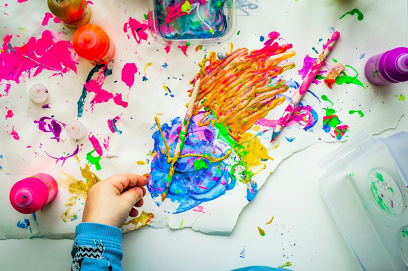
Art can also be a way to express and amplify joy, as children work with bits of bright paper, glitter, stickers, and gloopy paint in vivid colors.
Alice Honig describes one example in her book: “Lonnie drew a bus and then scribbled all over it with a brown marker. The teacher was puzzled. She did not act disappointed by his scribbles. She did ask him gently to tell her about his picture. The child soberly explained, The child soberly explained, “That is the ambulance that took my dad to the hospital.” The brown scribbles over Lonnie’s picture expressed his dark scared feelings about his father’s illness. Art can also be a way to express and amplify joy, as children work with bits of bright paper, glitter, stickers, and gloopy paint in vivid colors.