


Assessing
English Language Learners with Disabilities
Let’s learn together to identify and implement sound evaluations and practical procedures for students with disabilities who are also English Language Learners.
What is additional or different
during the special education process?
A critical issue in US education today is the over-representation or under-representation of minorities in special education. There are many reasons for this phenomenon, including misinterpretation of the various linguistic and cultural backgrounds that many students bring into US schools. Often, these differences are seen as indicators of learning disabilities.
How then can educators recognize the difference?
Our hope is
To increase the number of assessment professionals who are better qualified and who can improve the assessment practices used with ELL students as required by law.
To enhance report writing skills in the eligibility process
To reduce over-identification and under-representation of linguistic minorities in Special Education
For more information, contact the institute faculty
Dr. Maria de Lourdes B. Serpa | mserpa@lesley.edu
Dr. Patricia Crain de Galarce | pcrainde@lesley.edu
-
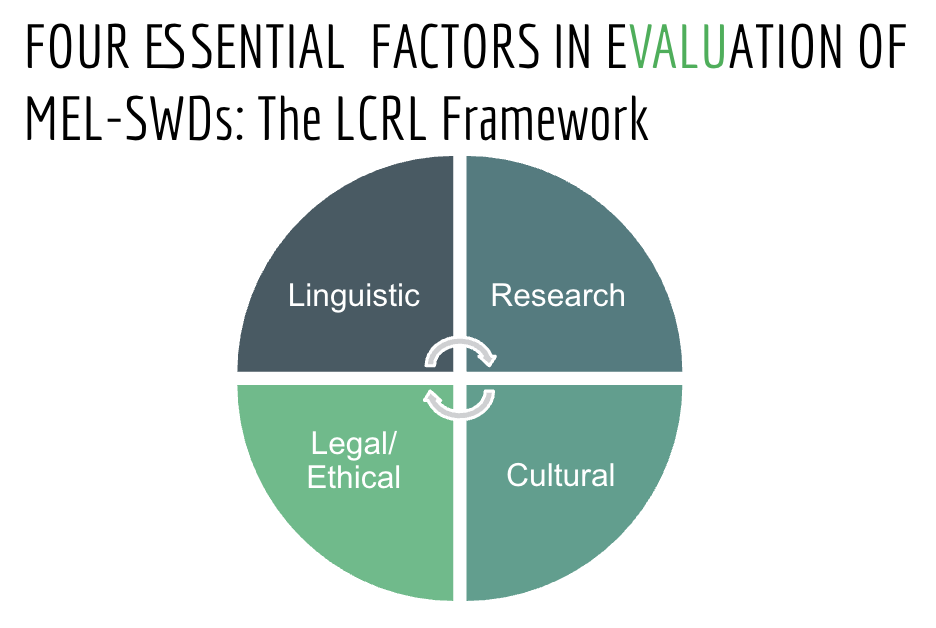
LINGUISTIC FACTORS include understanding the linguistic characteristics of the student’s Home Language Knowledge and how it interacts with English (positive transfer, negative transfer). The stages of Second Language Acquisition, WIDA proficiency level, stages of syntactic development, error analysis, home language skills and access to language in learning environments.
-
CULTURAL FACTORS include understanding your student’s cultural backgrounds to best connect and interpret behaviors. Some tools you may consider include the observation form, Stage of Cultural Adaptation, and Cultural Identification Styles.
-
Item descriptionRESEARCH FACTORS include Evidence-Based Bilingual Research like cross-linguistic transfer and dual-language effectiveness. Instructional Quality Studies include guidance like the National Reading Panel and Chall’s stages of reading. Monolingual biases often lead to misinterpretation of Assessment Data and inability to distinguish difference from disability.
-
LEGAL & ETHICAL FACTORS are found at the interaction of three sets of laws: CIVIL RIGHTS, LANGUAGE-LEARNING EDUCATION, and SPECIAL EDUCATION (IDEA 2004, Section 504, ESSA 2015, Title VI, EEOA, LOOK Act, etc.). Assessments therefore must: Be nondiscriminatory, Use home language, Be valid and reliable, Be administered by trained professionals, Measure (dis)ability- not English proficiency, Use multiple tools, Include all areas of need, Not be based on lack of instruction
-
The LDLD project has resources to support educators to better understand culture and language of their students. https://ldldproject.net/model.html
-
-
Find checklists, stages, scales, guidance, and much more. Driving Misdiagnosis: Guidelines for Using American English Standardized Tests with ELs/Bilingual Students
-
Discover concrete tools to support inclusive IEP development, promote educator and family collaboration, and lead with clarity and purpose to implement systemic change. Washington’s Comprehensive Inclusive Education
-
After exploring the LDLD website be sure to investigate the favorite sites of Dr. Maria Serpa!
“If evaluators are not aware or lack sensitivity, experience, and training to adequately account for the cultural and linguistic needs of students, they are not only conducting an unethical assessment but also are in violation of the IDEA.”
Board of Regents of the University of Wisconsin System, on behalf of the WIDA Consortium (2013)