

A Whole Child Approach
Addressing the needs of the whole child (competency, relationships, self regulation and health/well being) in a trauma sensitive manner requires a three pronged approach, trauma sensitive whole school and classroom practices as well as trauma sensitive individual student supports.
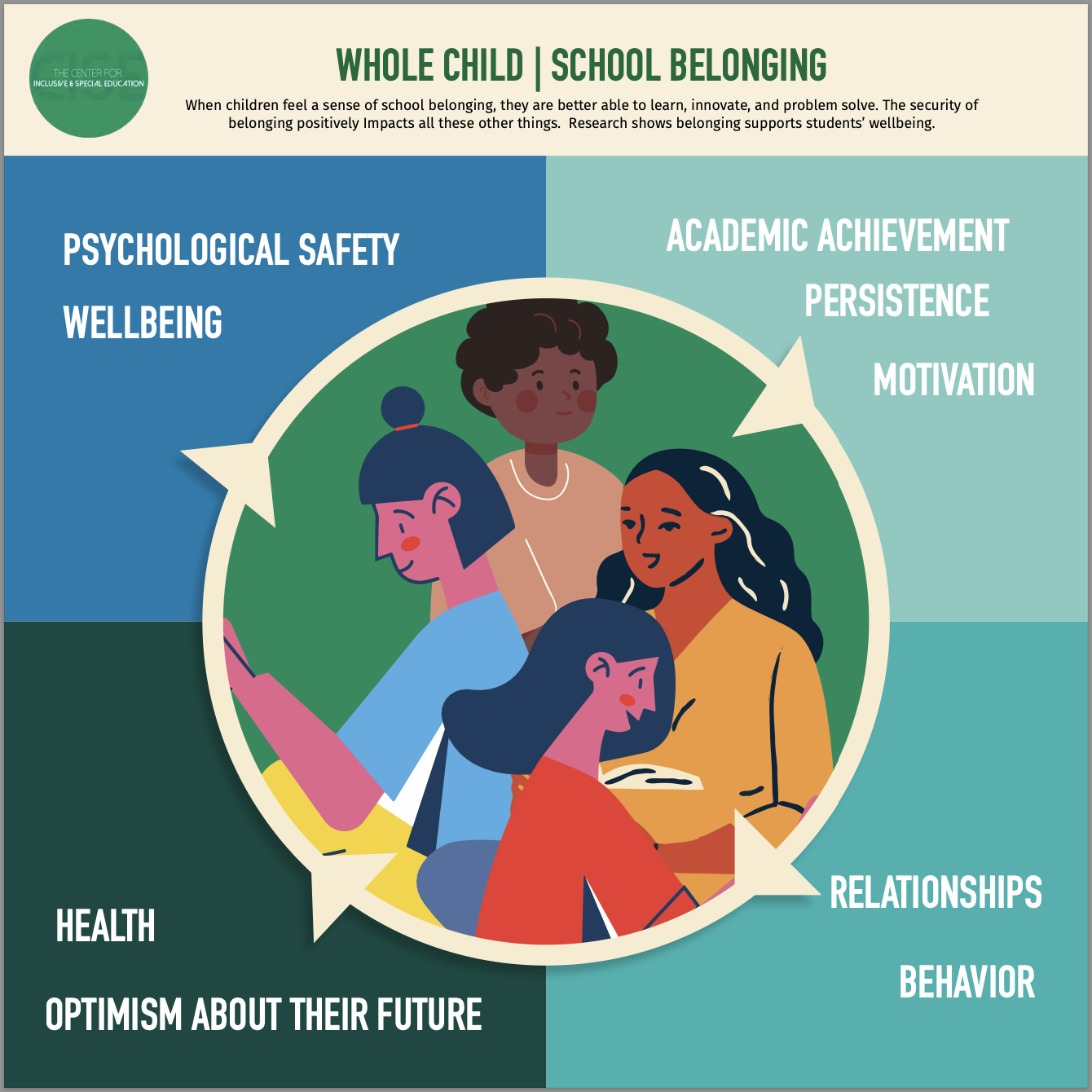
Understanding the whole child helps to build trusting relationships and supports student learning.
A Trauma-Sensitive Lens
“Helping Traumatized Children Learn, Vol 1”, Cole et al. Massachusetts Advocates for Children, Cambridge, Ma.
Strategies to Support Students
Regulation of Emotion Supports
Maintain a calm voice and demeanor
Be aware of student body language
Teach self awareness-Recognize and gauge emotional state (Visual as well as verbal)
Teach vocabulary for discussing feelings
Teach affect modulation/Calming
Response examples for social situations
Identify trigger situations
Provide a safe space to express emotions
Breaks and calming techniques
AVOID: Trivializing student feelings and Engaging in a power struggle
Regulation of Behavior
Develop student’s self awareness
Clear and consistent expectations and consequences
Provide student with strategies and a plan that rewards using strategies
Provide vocabulary for talking about feelings
Offer limited number of choices
Quiet or “Chill” zone for student to calm down
Scheduled breaks-Physical activity (Walks, etc.)
Use school resources to develop student social skills
Debrief incidents as a learning tool
Clean Slate-When the structured/expected response to the student’s behavior is complete, the “Slate is wiped clean” ; like hitting the reset button
AVOID: Raising your voice, engaging in the power struggle; Embarrassing the child in front of the class
Student Self Awareness
Recognizing bodily sensations as emotional indicators.
Having an emotional vocabulary. Communicating feelings.
Coping with arousal level.
Teach child to be self aware of the level
Containing it to allow child to focus
Managing it, to avoid hair trigger actions
Managing it, to avoid shut down
Learning to recognize triggers; minimizing them, managing a response to them
Recognizing emotional cues in others.
Making appropriate behavioral choices based on emotional state.
We are aware bulletin board- Stems to complete such as “I like myself because...
Formal curriculum-Second Step, Social Thinking, Collaborative Problem Solving, Zones of Regulation, Others