

The Wholebeing Approach to Trauma Sensitivity
Addressing the needs of the whole child (competency, relationships, self regulation and health/well being) in a trauma sensitive manner requires a three pronged approach, trauma sensitive whole school and classroom practices as well as trauma sensitive individual student supports.
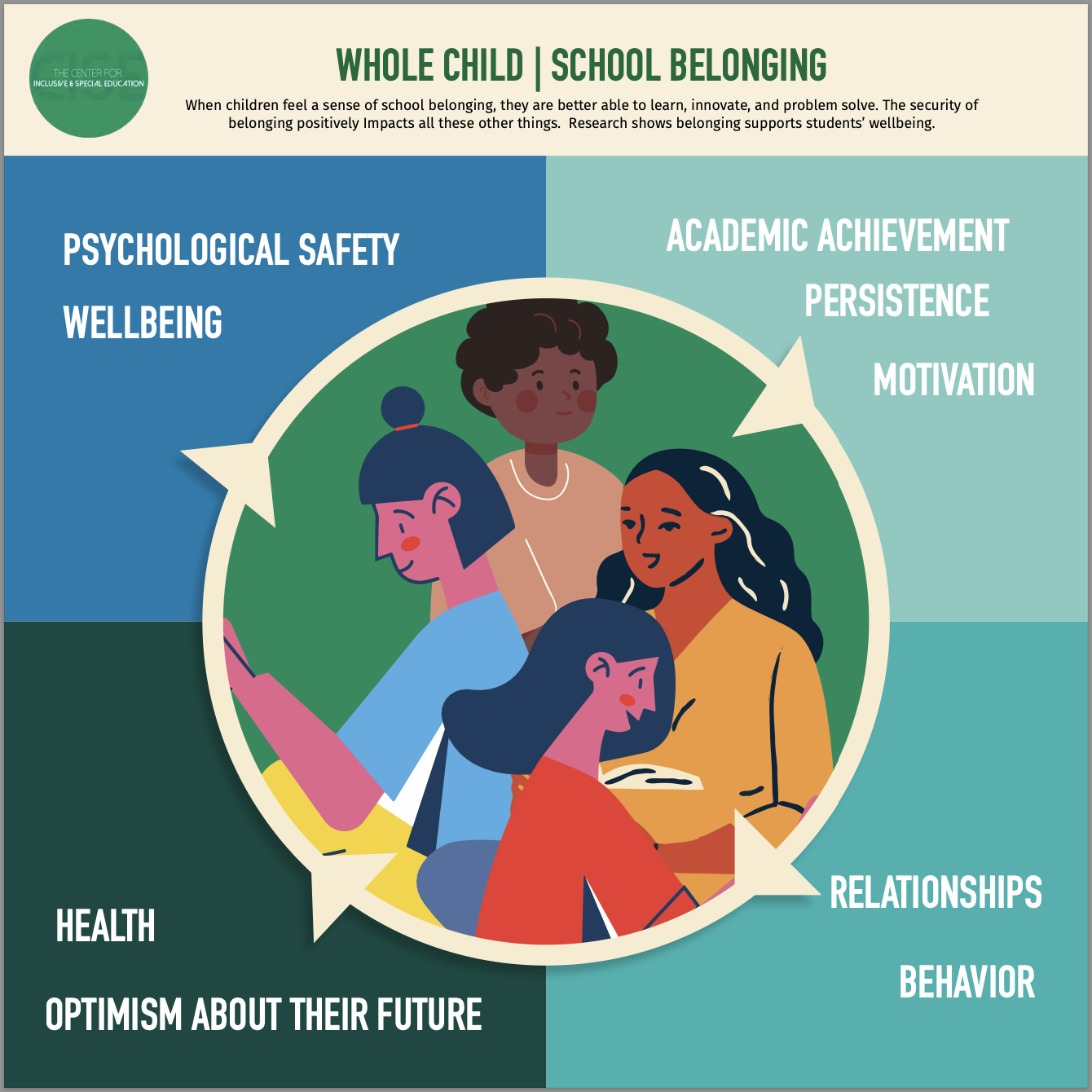
Understanding the whole child helps to build trusting relationships and supports student learning.
A Wholebeing Lens Changes Everything
Trauma-sensitive schools are not about lowering expectations. They are about creating conditions where students can meet expectations.
When educators adopt a whole-child lens, they begin to see:
behavior as communication,
connection as intervention,
belonging as prevention,
and relationships as essential to learning.
This work is not about being perfect. It is about being intentional.
Sometimes the most transformative thing a teacher can say is:
“I’m glad you’re here.”
Because for many students, school may be the safest and most predictable place they experience all day.
And sometimes healing begins with one adult who chooses to see the child before the behavior.
Read more to understand a Trauma-Sensitive Lens
“Helping Traumatized Children Learn, Vol 1”, Cole et al. Massachusetts Advocates for Children, Cambridge, Ma.
Trauma Affects the Whole Learner
The effects of traumatic experiences reach far beyond behavior. Trauma can impact:
Attention and concentration
Memory and processing
Emotional regulation
Relationship-building
Executive functioning
Problem-solving
Self-worth and identity
Physical health and stress responses
As a result, many students come to school without the developmental skills educators expect them to have. When schools misunderstand these gaps, students are often disciplined, isolated, or excluded from the very communities that could support their healing.
Disconnection becomes both the symptom and the consequence.
Strategies to Support Students
Regulation of Emotion Supports
Search for Islands of Competence (Robert Brooks)
Maintain a calm voice and demeanor
Be aware of student body language
Teach self-awareness- recognize and gauge emotional state (Visual as well as verbal)
Teach vocabulary for discussing feelings
Teach affect modulation/Calming
Response examples for social situations
Identify trigger situations
Provide a safe space to express emotions
Breaks and calming techniques
AVOID: Trivializing student feelings and Engaging in a power struggle
Understanding Trauma and Its Impact on Learning
Trauma is defined as:
“A response to a deeply distressing or disturbing event that overwhelms an individual’s ability to cope, causing feelings of helplessness and fright” (Helping Traumatized Children Learn, Vol. 1).
One of the most important words in this definition is response.
Trauma is not only about the event itself. It is about how the individual experiences and processes the event based on their developmental stage, relationships, coping skills, previous experiences, and sense of safety.
Consider the difference between falling into a lake when you know how to swim versus when you do not. The event may be the same, but the experience is entirely different.
Children impacted by trauma often develop adaptive survival responses that help them cope in unsafe or unpredictable environments. Those adaptations may later appear in classrooms as inattentiveness, withdrawal, perfectionism, aggression, anxiety, or difficulty regulating emotions.
These are not character flaws. They are survival strategies.